The First, and the Fiercest Expeditions Across Antarctica
Antarctica is the most hostile place humans have ever chosen to walk across — not conquered, not tamed, but endured. Long before modern skis, satellite phones, and GPS, the continent drew explorers who believed the only way forward was on foot, pulling everything they needed behind them. These early walking expeditions were brutal, often tragic, and laid the foundations for every polar journey that followed. This is the story of how humans first crossed Antarctica step by step — and how those footsteps still echo in modern expeditions today.
The First Attempts: Walking Into the Unknown (1890s–1900s)
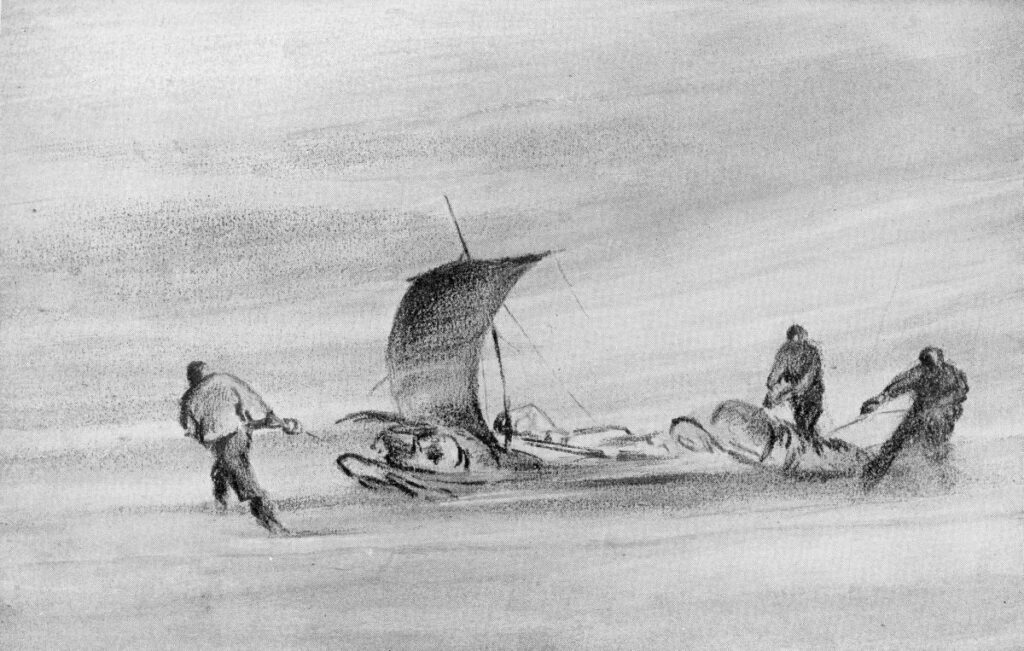
At the turn of the 20th century, Antarctica was the last blank space on the map. No one knew what lay inland beyond the ice cliffs — mountains, plains, or endless frozen nothingness. Early explorers travelled on foot and by man-hauled sledges, hauling supplies that could weigh over 100 kg per person. Dogs and motor sledges were unreliable or unavailable, so human endurance was the main engine. One of the earliest and most influential expeditions was led by Robert Falcon Scott, whose Discovery Expedition (1901–1904) pushed farther south than anyone before. Though Scott did not reach the South Pole, his team proved that extended inland travel on foot was possible — at an enormous physical cost. Frostbite, scurvy, malnutrition, and exhaustion were constant companions. These were not walks; they were survival marches.
The Race to the South Pole (1910–1912)
The most famous walking expeditions in Antarctic history came during the race to the South Pole. Two teams set out with the same goal — and vastly different outcomes.
Amundsen: Efficiency on Ice
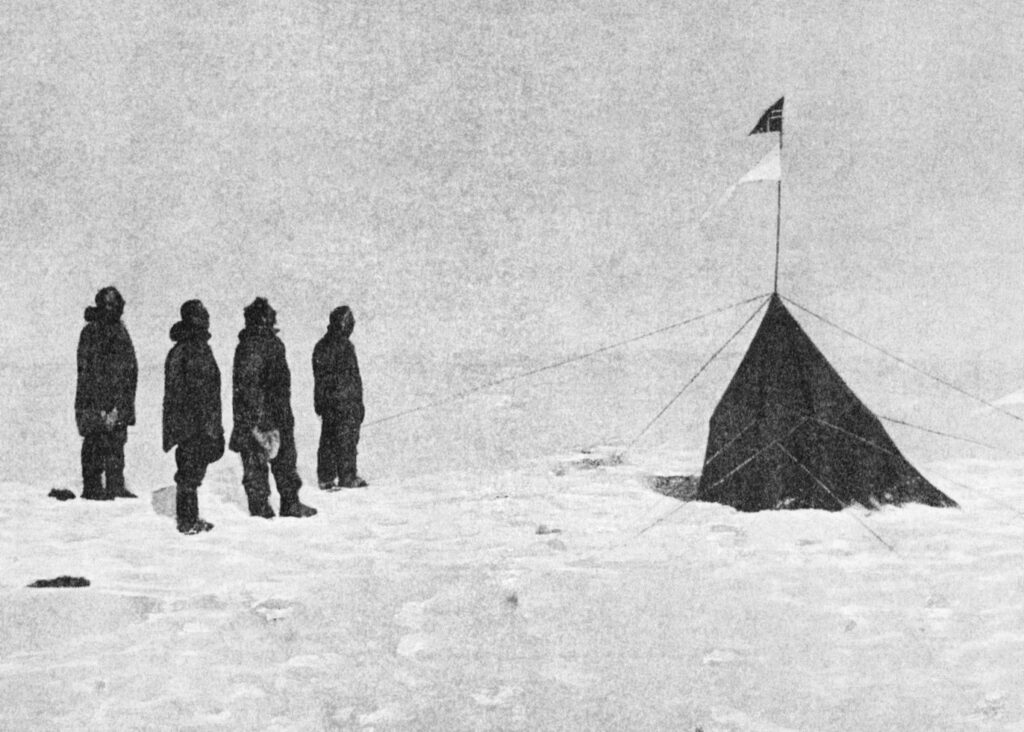
Norwegian explorer Roald Amundsen reached the South Pole on 14 December 1911. His success was built on meticulous planning: skis, dog teams, lightweight gear, and an intimate understanding of cold environments.
Though dogs did much of the hauling, long distances were still travelled on foot and skis. Amundsen’s journey showed that Antarctica could be crossed — if approached with ruthless efficiency rather than romantic heroism.
Scott: Tragedy on the Return
Scott reached the Pole weeks later, only to find Amundsen’s flag already planted. The return journey became one of the most harrowing walking expeditions ever recorded. Scott and his companions man-hauled sledges across the ice until starvation, cold, and injury overtook them. None survived the return. Their story remains one of endurance, courage, and devastating miscalculation.
Between Wars: Pushing Distance, Not Glory (1920s–1950s)
After the Heroic Age of Antarctic Exploration, expeditions became less about national prestige and more about scientific and geographic understanding. Walking journeys continued, but were often combined with mechanical transport and aerial support. Still, when machines failed — and they often did — explorers walked.Expeditions began mapping mountain ranges, ice shelves, and vast inland plateaus, proving that Antarctica was not just a pole, but a continent of immense scale.
The First True Crossing on Foot (1957–1958)
The first successful overland crossing of Antarctica came during the Commonwealth Trans-Antarctic Expedition, led by Vivian Fuchs. While supported by vehicles and supply depots, large sections of the journey still involved travelling on foot across crevasse-ridden terrain and featureless ice plateaus. This expedition proved that Antarctica could be crossed end-to-end — a milestone that reshaped what future explorers believed possible.
The Rise of Unsupported Walking Expeditions (1970s–Present)
From the late 20th century onward, a new philosophy emerged: less support, more self-reliance. Modern expeditions began stripping away external assistance, choosing to walk — often alone — across Antarctica while hauling their own sleds. No dogs. No vehicles. No air drops.
Explorers like Reinhold Messner, Børge Ousland, and others redefined Antarctic travel as a test of mental endurance as much as physical strength. Temperatures still plunge below −40 °C. Winds erase tracks within minutes. Whiteouts collapse distance and direction into nothingness. Even today, walking Antarctica remains one of the most psychologically demanding journeys on Earth.
Why Walking Antarctica Still Matters
Walking expeditions across Antarctica are not about speed or records alone. They are about human resilience, decision-making under pressure, and learning how little margin for error exists at the edge of survivability. Every modern solo or unsupported crossing stands on the frozen footprints of those early explorers — the men and women who first believed it was possible to walk into the heart of the coldest place on Earth.And each new expedition writes another chapter in a story that is still unfolding.